



Leave a comment

Polls show mix of support for Anderson, Woode-Smith

Rathlyn, HB, May 3 – Polls conducted over the previous few days have shown international support for continued Federal leadership in Sirocco over the Libertarian opposition, however it has transpired that it is not all smooth sailing for Premier Daniel Anderson.

A poll introduced by the Times on Tuesday in the popular micronational Facebook group MicroGroup asked respondents whether they favoured the conservative Federal Party led by Anderson or the opposing Libertarian Party led by opposition leader Nicholas Woode-Smith.

58% of respondents (seven voters) chose Federal, while the remaining 42% (five voters) chose Libertarian.

Anderson declined to vote on the poll to lessen the chance of distorted statistics, however Woode-Smith put forward a vote for Libertarian.

Meanwhile, a poll put forward by Bradley of Dullahan on Wednesday showed more competition for the right in the community.

When asked who their preferred “Right-winger” was from a selection of five candidates, Woode-Smith managed to edge out Anderson with a one-vote victory (46%-36%).

Bradley and Lostislandic politician Deniz of Pavlov were tied with one vote (9%) each, while Saxon Emperor Sean Anderson received no votes.

Suggestions have been raised that respondents favoured Federal due to its stable period of governance and its development of Sirocco over the last thirty months, coupled with its capitalisation upon widespread distrust against the socialist policies in most micronations in the community. Internationally he is seen by some as more level-headed than the vocal Bradley and as following more sensible policies than Woode-Smith.

Woode-Smith, while favoured by libertarian-minded respondents, is seen by some as somewhat extreme on the Siroccan political spectrum. His popularity internationally, however, is suspected to originate from a perspective that he is the lesser of two evils in the political sphere of Sirocco, if merely from his somewhat quieter stand against socialism in the community.

Bradley’s low vote has been attributed to his seemingly extremist views on a variety of subjects, while that of Deniz’s has been linked to his relatively low influence on the community.

Sean Anderson’s has been linked to his almost non-existent presence in the community.

Sirocco is notable for having a government and opposition made up of solely right-wing parties, although their views on some matters differ.

Premier Anderson commented to the Times that “Federal is evidently the more highly-supported of the two, and we shall continue to lead onward to a greater Sirocco.”

Woode-Smith was unavailable for comment.

Leave a comment

Plight of pro-Sirocco Sabioveronese dissident reaches Rathlyn

DISSIDENT: Sabioveronese conservative Hans Starlynn yesterday slammed Juclandian socialism and praised Siroccan measures against Communism.

Rathlyn, HB, May 2 - An outspoken Sabioveronese dissident has slammed Juclandian socialism and has voiced his support for Sirocco’s anti-communist measures in a strange twist on the near-constant ideological battles in the MicroWiki community.

News broke early this morning in the Siv Photograph, Sabia and Verona’s predominant news source, of plush toy Hans Starlynn’s vocal opposition to May Day celebrations in the Sabioveronese city of Salisse.

Starlynn reportedly came to attention by shouting anti-Juclandian and anti-socialist statements to a crowd in the municipality of Caenia, widely viewed as the centre of Sabioveronese conservatism.

The Phonograph reported Starlynn as shouting such statements as “Juclandia and its socialists have betrayed us” and “things like this wouldn’t happen in Sirocco”.

A cellphone video sent to the Times a few hours ago appears to show Starlynn producing a large photograph of socialist leader Napoleon Bleuberrie and proceeding to tear it into quarters before lighting the papers on fire.

Member of the conservative Unity Party and local politician Ann Stefanović slammed Starlynn as a “disgrace to the blue party”, while Starlynn’s brothers Wilhelm and Gerhardt claimed excessive alcohol consumption to be the cause of his outburst.

Siroccan Premier and leader of the conservative Federal Party Daniel Anderson has lauded Starlynn’s actions and dismissed any criticism levelled at him for his protest yesterday.

“What the drunk mouth says is what the sober mind thinks. This is obviously not the random outburst of a drinking session, this is a clearly thought-out and obviously long-standing opposition to the prevalence of socialism, in particular the Juclandian, in Sabia and Verona.”

“The Siroccan Federal Party strongly applauds Mr. Starlynn’s actions in resisting the wave of socialism that has enveloped so many micronations. It is rare to hear of a conservative backlash against socialism – it is usually the other way around.”

“It is unfortunate to be informed that Mr. Starlynn has been charged with public disturbance while freely voicing his political opinion. The Siroccan government shall be looking into this matter further to see if there is any assistance we can give Mr. Starlynn and any of his ideological allies in the struggle against socialism.”

When asked his opinion on the report from Starlynn’s ex-wife Rosie that he [Starlynn] had kept a large portrait of Anderson in his living room, the Premier replied that he was “flattered that someone would go to such lengths to support our stand against the left.” He later added that he hoped it was “a decent picture”.

1 Comment

Zealandian territories ceded to Sirocco

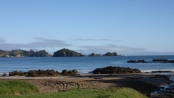
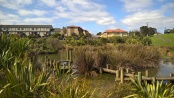
Rathlyn, HB, Apr 14 – Sirocco will tomorrow morning wake up with its boundaries stretched much further with the impending acquisition of Zealandia’s New Zealand territories.

Zealandia and Sirocco tonight formally agreed on a document to cede Zealandia’s land in Canterbury, New Zealand to Siroccan control.

The Treaty of the Cantabrian Provinces formally cedes the Zealandian municipalities of Greater Hagley, Magja, Sandford, and Turaspolien to Siroccan control.

Greater Hagley and Sandford will become Territories, while Magja and Turaspolien are to become Dependencies.

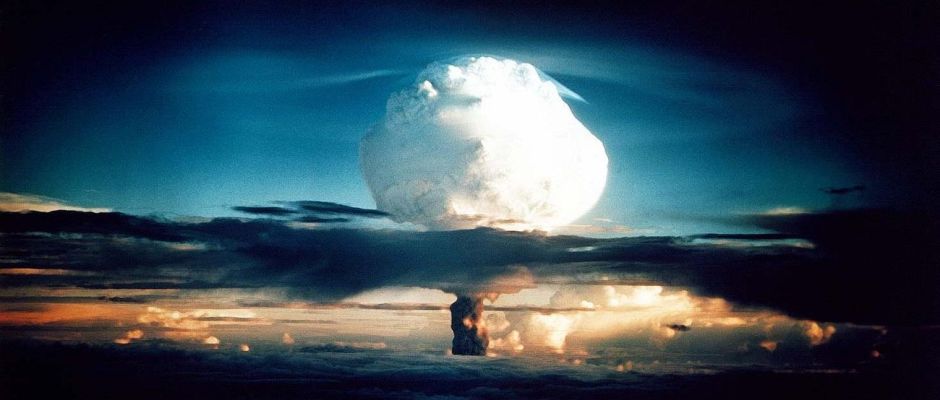
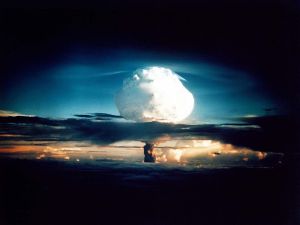
Magja and Turaspolien will also be renamed to Maxia and Trinity, respectively, while Greater Hagley and Sandford will be left as-is. Magja’s renaming is to honour the life and achievements of Maxie Anderson, a prominent Siroccan Labrador, while Turaspolien’s change to Trinity hails Sirocco’s Atomic Age culture by honouring the first test of an atomic bomb in 1945.

Premier Daniel Anderson said that “the Federal Commonwealth of Sirocco is extremely pleased that the strong bonds of trust and friendship between our nations has resulted in a mutually agreeable treaty of cession and is a fine display of Zealandian confidence in the Siroccan nation and its people.”

Zealandian Grand Duke Håkon Lindström said to the Zealandian Gazette that “We are most pleased to formally hand over these fine municipalities to our good friends in Sirocco, this treaty shows the good trans-Tasman trust and friendship that has developed between our Federation and the Federal Commonwealth of Sirocco”.

Opposition leader Nicholas Woode-Smith took a different approach, however, stating to the Times that “Sirocco continues to grow unabated. As ethical citizens, we must halt this land seizure in order to maintain the de-centralized and free system we take for granted.”

The new acquisitions will be grouped together into the Region of Lindström, named after the Grand Duke of Zealandia, and will be represented by the Southern Dependencies seat in the Executive, although the Siroccan government has said this is purely on a temporary basis.

The four new parcels of land will be formally transferred at 1AM NZST tomorrow morning (midnight Zealandia time).

6 Comments

Margaret Thatcher dies aged 87

IRON LADY: Margaret Thatcher dominated Britain and became one of its most infamous prime ministers during her 1979-1990 tenure.

Rathlyn, HB, Apr 9 – Former British Prime Minister Margaret Thatcher has died.

She was 87.

Dominating Britain for an extraordinary eleven-year term from 1979 to 1990, she transformed a broken-down country falling apart at the seams into a more modern and prosperous country.

Her efforts polarised the country and to an extent the world. While some lauded her for turning Britain around, others loathed her for going up against the unions, introducing the hated poll tax and forcing her agendas despite the opposition.

First coming into Parliament in 1959 to represent the Finchley electorate, she rose quickly in the Conservative Party, becoming the education secretary in 1970.

She was a pioneer in women’s politics in Britain. Despite telling the Liverpool Post in 1974 that a woman would not lead the party nor serve as prime minister in her lifetime, she proved to be the only one who did just that in 1975 and 1979, respectively.

She capitalised on a crumbling British economy, an ineffective Labour government and the infamous ‘Winter of Discontent’, which during late 1978 and early 1979 crippled the country with a series of strikes, most startling of those being the gravediggers, the striking of whom saw drastic measures taken to dispose of mounting piles of unburied bodies.

Her 1979 electoral victory reflected tiredness with the Labour government and optimism toward her promise to reduce the role of the state and promote free enterprise.

Her government was hugely bolstered by Britain’s victory in the Falklands War following the Argentinian invasion of the islands in April 1982. Her commitment to Britain was reflected in her ignoring advice to not go to war, a gamble that worked in her favour when in 1983 she tripled her majority in the House of Commons.

Her shared ideologies with then-US President Ronald Reagan brought the two nations together during the 1980s.

Her time in office was cut short in 1990 when the Conservative Party rose up against her. Leaving 10 Downing Street in tears on 28 November 1990, she felt a sense of betrayal even years later against her party.

Her legacy lived on, however, with the Conservatives winning the 1992 election. The party’s good fortune finally petered out in 1997, eighteen years after Thatcher’s first victory, with John Major’s defeat to Tony Blair’s revitalised Labour.

In later years her health had begun to decline.

In 2002, she was forced to end public speaking following a stroke, while in 2008 she was admitted to hospital after collapsing at a House of Lords dinner. She died overnight New Zealand time in London’s Ritz hotel from a stroke, her death confirmed at 11:52pm NZST last night (12:52pm BST).

In a statement made outside 10 Downing Street, British Prime Minister David Cameron hailed Thatcher as “the patriot prime minister” and said she had “taken a country that was on its knees and made it stand tall again”.

US presidents, both those she worked with and those elected after her fall, paid tribute to her, praising her as a close American ally and a strong believer in capitalism and freedom.

Poland is considering erecting a statue in her honour to mark the commitment she made to freeing Eastern Europe from Soviet influence in the 1980s. Her standing in Poland and in other nations in Eastern Europe is very high for this very reason.

Premier Daniel Anderson paid tribute to her this morning.

“We have lost a great figure in international politics. While controversial, she had Britain’s best interests in mind. Her steely resolve against aggression, be it Soviet, Argentine or elsewhere, was admirable and should inspire us all. As a fierce enemy of Communism and a ferocious advocate of capitalism and liberty, Mrs Thatcher was an utterly extraordinary figure and all Siroccans shall remember her with praise and affection in the years to come.”

Intermicronationally the response has been mixed.

Bradley of Dullahan regarded her as an ideological hero.

“Margaret Thatcher was a hero who stopped most riots, made sure that the trash was collected and showed that women were capable of leading the country through tough times. She was an iron lady and improved the position of women everywhere. The Wyvernian Liberal Party finds Thatcherism a core ideology. She will be missed.”

Kozuc leader Riley Small said he didn’t agree with her policies, but his condolences were with her family.

Elsewhere however, the response has been less positive.

Renasian leader Jacob Tierney recited the “Ding Dong The Witch Is Dead” song from The Wizard of Oz, while Zealandian Grand Duke Håkon Lindström said that “Whilst it is sad news for her friends, family, and supporters, one cannot forget her actions against the workers.”

Sirocco will formally enter a period of three days’ mourning, alongside Lostisland, Victoria and Wyvern.

Leave a comment

Concerns growing over state of Palasian government, scandal abounds

Renford, Palasia, Apr 4 – Notoriously changeable Palasia has again been rocked by instability, with an anonymous source informing the Times of many problems and corruption claims within the small Norfolk state.

The anonymous source stated that Palasia does not have a monarchy but is instead presided over by President John Gordon in the form of a Military Commission. There have been growing concerns in the country as Mr.Gordon has appeared to be losing touch with the state.

The source also mentioned a ‘grow’ operation similar to that of Kozuc’s, albeit on a significantly smaller scale.

In addition to this, it has come to light that the President has also been “paying off” some several former Palasian citizens to keep quiet about the operation and other problems citing corruption within the nation.

There has also been a two-month rebellion in the Northern Woodland area of Palasia which has resulted in an extremely underequipped, non-disciplined and untrained military. The North half was momentarily in rebel control until the Palasian military launched a counter-offensive to gain back the strategic territory resulting in a month long conflict.

The source, who has close links with the President and wishes to remain anonymous, has stated that there are a multitude of problems in addition to these.

1 Comment

MicroWiki to shut down, community to move to Wikia

Alston, CA, Apr 1 – In a shock move this morning, MicroWiki site owner Pierre d’Égtavie has announced his intention to shut down the popular micronational encyclopedia and shift back to the Wikia platform in the face of financial difficulties.

In an exclusive interview with the Times this morning, d’Égtavie gave his reasoning behind the shock decision.

“Our hosts have put the cost of running the site up to £35 [§39 7d/NZ$63.53] a month, up from the £19 [§21.55/NZ$34.49] I was paying for the site before. A year ago when the site was profitable, the costs could easily have been covered by the ad system – they were bringing in on average about £25-£30 a month. I’ve had to make the call to shut down the site because on average I’m only getting about £7 [§7.94/NZ$12.71] these days, and I can’t afford to run the wiki and all its subsites on that.”

“We haven’t had the best run with Wikia in the past, but at least we don’t have to pay for it. It’s got all the stuff we have now, like the Commons and Forums, so integration shouldn’t be too much of a challenge.”

D’Égtavie also confirmed his retirement from the position when the transition is completed, citing macronational obligations that required time to not be consumed by micronationalism.

Administration of the site will be shared between the administrators and community member Sebastian Linden, a former administrator with knowledge of site management.

Rumour had been circulating since late last night (NZDT) when d’Égtavie had mentioned that ad revenues had dropped in the popular Micropolitan 5 chatroom. Speculation grew when Bradley of Dullahan enquired if it would mean closing the site, to which d’Égtavie replied that “I’m not ruling it out”.

Premier Daniel Anderson, who serves as one of the site’s administrators, stressed that the site would not be merging back into its predecessor, MicroWikia, that the community largely abandoned in October 2010.

“We will be moving to microwiki.wikia.com, not the micronations.wikia.com site that many have thought. That site is too far gone to save, so it is better for us to create a new site and start from scratch.”

Anderson declined to comment on his personal feelings towards the shift.

The transition began at 4:01am NZDT this morning, with the main page and articles and files pertaining to 38 nations already having been ported. Full transition is expected to be completed by around 11am NZDT this morning.

Administration staff have stressed that no files or pictures will be deleted in the transition.

The announcement prompted a flurry of responses ranging from encouragement and enthusiasm to outrage and desperation.

Prsänëan leader James Wilary criticised the decision, citing the strong feelings against Wikia during the “Mass Exodus” of October 2010.

“We’ve come so far with this community, so why are we closing the site? If anything we’re better than ever.”

Juclandian King Ciprian slammed d’Égtavie, saying that “once again he just goes and does what he wants without asking the community first. I’m happy he’s going.”

Zealandian Grand Duke Håkon Lindström added that he would consider taking his nation out of the community in light of the news.

Unofficial reports have come in from Wyvern stating that their government has blamed the shutting down of the wiki on rising immigration and European Union bailout measures.

Linden offered to buy the site off d’Égtavie, saying that he would be able to secure payments, while Kozuc leader Riley Small offered to fund the site under d’Égtavie’s leadership through agricultural profits.

D’Égtavie declined, however, saying that problems with the host had also prompted his decision.

The so-called “MicroWiki 6” will formally open at 12pm NZDT (12am GMT) this afternoon, with the current “MicroWiki 5” closing down twelve hours later. Users are being advised to create accounts on the new site (links below) before the old site shuts down.

WHERE TO GO FOR THE NEW MICROWIKI

MicroWiki: microwiki.wikia.com
MicroWiki Commons: commons.microwiki.wikia.com
MicroWiki Forums: microwiki.forumotion.com
UnMicroWiki: un.microwiki.wikia.com

1 Comment

Concerns over health of Maxie Anderson

GOOD INNINGS: At 15, Maxie has managed to outlast many of her canine compatriots, but there is grave concern that illness may soon claim her.

GOOD INNINGS: At 15, Maxie has managed to outlast many of her canine compatriots, but there is grave concern that illness may soon claim her.

Rathlyn, HB, Mar 18 - Prominent Siroccan Maxie Anderson is tonight battling a major health scare in Alston following worsening health.

The fifteen-year-old Labrador is said to be in poor physical condition with bald spots, weak hearing and very little sight ability left.

Siroccans are tonight rallying around her to give her support.

Premier Daniel Anderson, of whom Maxie has lived with since 2001, spoke briefly to the Times on her deteriorating health.

“This news comes as a complete shock to the system. We are doing everything we can to make her comfortable at this time and we are all praying for a recovery.”

Minister of Culture Elizabeth Pountney remarked that she had been well-cared for to make fifteen years this year.

Labradors usually live to between ten and twelve years, and many have said that making fifteen is an admirable achievement.

In a statement to the government, Zealandian Grand Duke Håkon Lindstrom said that “I would like to extend my deepest sympathies to the Anderson family, the Siroccan Defence Force and the Siroccan people in this very tough time”.

Maxie had previously had a health scare in early June last year which she pulled through from with remarkable speed.

In honour of her services to Sirocco and of her longevity, she was tonight awarded the Order of the Federation, Sirocco’s highest honour; the Order of the Black Cross, Sirocco’s military order, of which she is the first and so far only recipient; and was made a General of the Siroccan Defence Forces.

She is also to be named a Knight Companion of the Order of Zealandia.

Alston tonight is a city of anxiety with residents hopeful of another miraculous recovery.

%d bloggers like this: